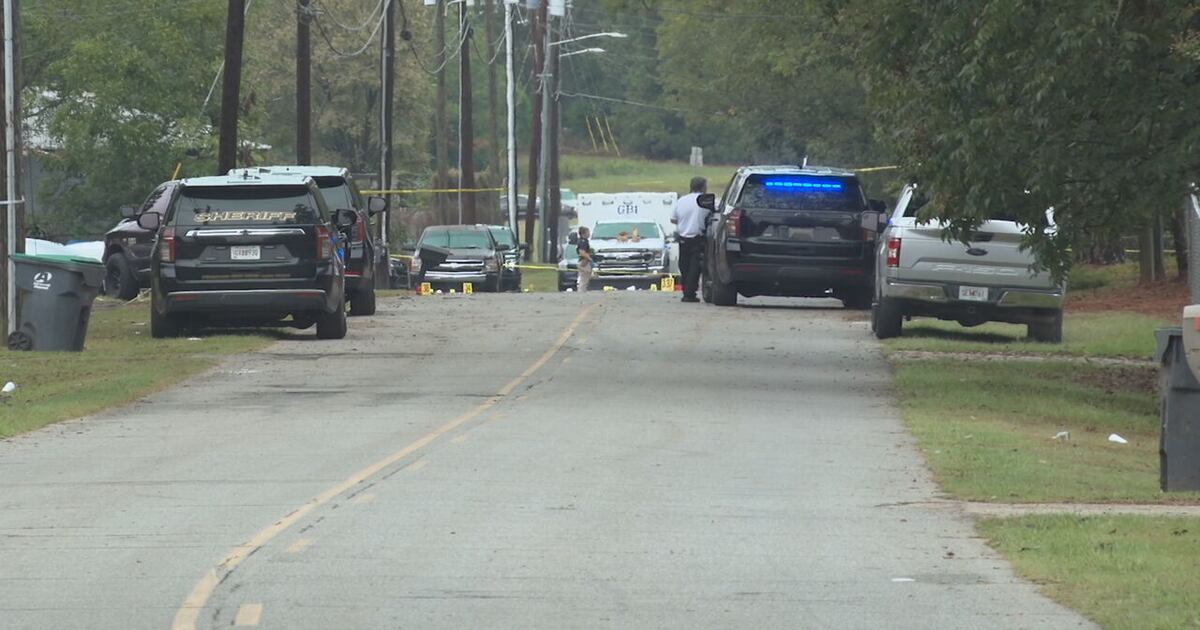
When Homecomings Turn Into Nightmares: The Fragility of Our Public Spaces
Personally, I think we have become dangerously desensitized to the geography of tragedy. When news breaks about a mass shooting at a homecoming block party in a small Georgia town like Vienna, a grim, rehearsed script immediately plays out in our collective consciousness. But if you take a step back and think about it, the reality of a thousand people gathered under the night sky to celebrate, only for joy to fracture into absolute panic within seconds, is a profound cultural indictment. We are living in an era where the simple act of gathering in a public street has quietly transformed into a high-stakes gamble.
The Illusion of Security in Open Spaces
One thing that immediately stands out about the Dooly County tragedy is that deputies were already stationed at both ends of the block party when the gunfire erupted. In my opinion, this detail shatters a very common public misconception: the comforting idea that visible law enforcement presence acts as an impenetrable shield against spontaneous violence. What many people don't realize is that when a crowd swells to a thousand individuals in an open, uncontained street grid, traditional security measures are stretched past their breaking point.
If you look closely at the mechanics of these events, it forces us to question whether our current model of public safety is fundamentally obsolete. Armed deputies can rush through panicked crowds—as the local sheriff and his team heroically did—to pull victims from the line of fire, but they cannot predict the split-second decisions of an individual intent on malice. What this really suggests is a deeper systemic vulnerability in how we manage large-scale public events, where prevention relies far more on cultural health than reactive policing.
The Indiscriminate Toll on Community Life
A detail that I find especially interesting—and profoundly heartbreaking—is the wide age range of the thirty-five injured victims, stretching from fourteen all the way to fifty-one years old, alongside the tragic loss of two young men in their early twenties. This wasn’t just a localized late-night youth gathering; it was a broad, cross-generational community anchor event where families, teenagers, and older adults intermingled.
From my perspective, this wide demographic footprint reveals how modern gun violence shatters the entire ecosystem of a small town. When a 14-year-old and a 51-year-old are caught in the exact same crossfire, it proves that these incidents do not discriminate by life stage, ambition, or social role. They tear through family trees and lifelong bonds, leaving behind a community-wide shockwave that takes generations to heal.
The Psychological Cost of Collective Desensitization
What makes this particularly fascinating, in a deeply unsettling way, is the quiet exhaustion that follows these events. This raises a deeper question about our collective psychological endurance: Are we slowly accepting that public celebration is now an inherent risk factor in modern life?
Personally, I worry that we are drifting toward a culture of retreat. When every homecoming, street festival, or block party carries the lingering specter of sudden violence, people naturally begin to withdraw into private, gated silos. We risk losing the vibrant, spontaneous public life that defines a healthy society simply because we refuse to address the root causes of why anger and lethal force have become the default response to conflict.
Ultimately, events like the one in Vienna demand far more than standard political posturing or temporary expressions of grief. If we continue to normalize the transformation of community homecomings into crime scenes, we are slowly surrendering the very soul of what it means to live together in an open society. In my opinion, until we confront the underlying social rot that breeds this level of recklessness, every celebration will continue to cast a long, heavy shadow over our sense of community.