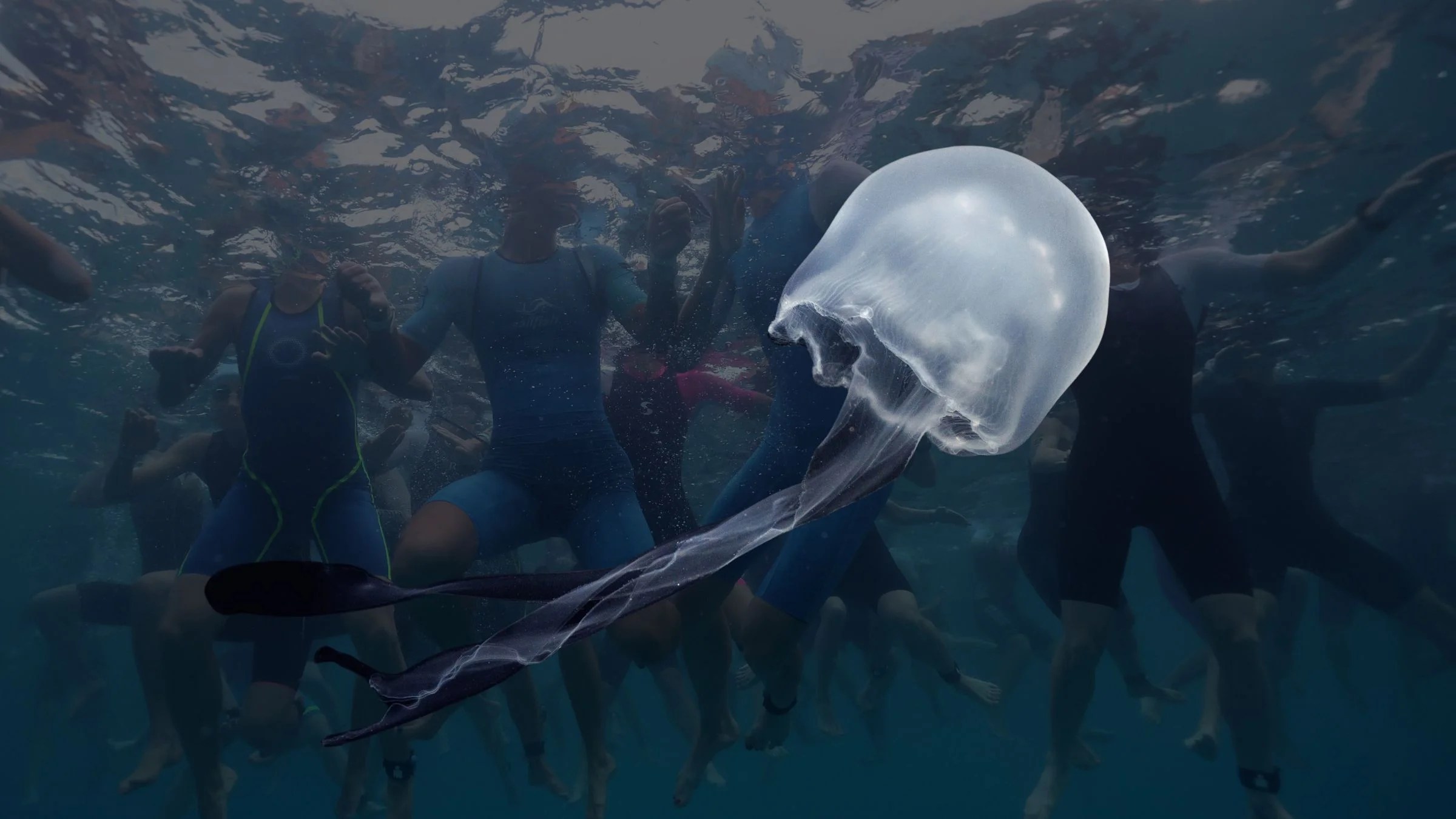
The Jellyfish Conundrum: A Threat to Ironman Kona
The Ironman World Championship in Kona, Hawaii, is a pinnacle event in the triathlon calendar, but this year, a peculiar phenomenon threatens to disrupt the festivities. As the 2026 edition approaches, a bloom of box jellyfish has emerged as a potential hazard for swimmers, particularly those participating in the Ho'Ala Training Swim and the main event.
These jellyfish, scientifically known as Alatina alata, have a peculiar timing issue. They choose to migrate and reproduce during a specific lunar cycle, which coincides with the Ironman's schedule. This natural process, known as a bloom, involves mature jellyfish swimming en masse towards leeward and south-facing shores for mating and spawning. While this is a natural occurrence, human factors such as overfishing and climate change have contributed to an increase in jellyfish populations, making these blooms more frequent and potentially more dangerous.
The impact of this bloom on Ironman athletes is a cause for concern. In the past, triathletes have encountered box jellyfish during training swims and the main event, resulting in severe stings and allergic reactions. Daniela Ryf, for instance, was stung twice during a warm-up in 2018 but managed to set a course record. Similarly, Menno Koolhaas and Matt Burton were stung during the 2024 Ironman World Championship, with Burton suffering anaphylaxis and withdrawing from the race.
The timing of the bloom is particularly unfortunate for the Ho'Ala Training Swim, scheduled for October 4th, just a week before the Ironman. The swim has been shortened from 2.4 to 1.2 miles, but it's unclear if this will prevent jellyfish stings. The jellyfish calendar predicts a high probability of a bloom during this period, and the race itself is on October 10th, 9 days after the full moon, which is within the high-risk window.
So, what can athletes do to avoid a jellyfish encounter? The most obvious solution is to check the jellyfish calendar and stay out of the ocean during the predicted bloom. However, if an open-water swim is unavoidable, swimmers should look for posted warnings, ask lifeguards about conditions, and never swim alone. Dr. Adam C. Ankrum, an Emergency Medicine Physician and avid swimmer, emphasizes the importance of staying calm if stung, as panic can be life-threatening.
In the event of a sting, athletes should follow these steps: get out of the water, rinse the affected area with vinegar or seawater (not urine or fresh water), remove tentacles with tweezers (wearing gloves), and seek medical attention if necessary. Dr. Ankrum also advises that most symptoms fade within 24-48 hours, but severe reactions may require emergency care.
Despite the potential risks, the author argues that the jellyfish bloom is not a deal-breaker for the race. While it may require athletes to miss a few scheduled swims, the overall experience and the opportunity to compete in Kona are worth the effort. The key is to respect the jellyfish and marine life, heed warning signs, and trust that with proper preparation, athletes can overcome any challenges posed by this peculiar bloom.